Blog

French Regional Food by Loic Bienassis

French Regional Food
My rating: 5 of 5 spoons
ggggg

Come along for a gourmand’s tour of traditional cuisine and culture in rural France! Divided into 27 chapters which are 27 regions, each chapter is further divided into local areas. For instance, the chapter on Normandy is further divided into The Contentin, Rural Normandy, The Auge, The Caux and The Bray. Discover each region’s cuisine, specialties and ingredients as well as iconic recipes and the traditions behind them. Not every local area has a recipe included, but the majority do.

Recipes are clear and easy to follow. Preparation time is clearly marked along with the level of difficulty shown by the number of asterisks. I didn’t see any that had more than three, so it seems to be a simple easy, medium and hard classification. There is a nice blend so that anyone can find something they can easily cook.  From the delectable simplicity of ‘Truffade’ to the more complex ‘Daube de Boef a la Dauhinoise’, there is something for everyone. I do wish they had included the English translation of the recipe name. Not all recipes have a photo, and so you either have to look up the translation, or read the recipe and guess what it is if you don’t speak French. ‘French Regional Food’ is not just a cookbook, though. It works as well to just curl up and read, soaking up French history, tradition and culture.

The book itself is a beautiful, high-quality hardback with nice, thick pages, a sewn binding and even a ribbon bookmark. It was clearly made to last a long time, and I really appreciate that in a book. This is a great book that I highly enjoyed and wholeheartedly recommend!

I received a copy of this book from Quarto Publishing for my honest review. All thoughts and opinions are my own.

150 Best Dips and Salsas by Judith Finlayson

150 Best Dips and Salsas: Plus Recipes for Chips, Flatbreads and More
My rating: 4 of 5 spoons
gggg 

From the simple (Feta and Roasted Red Pepper Dip) to the sublime (Chocolate Mousse Spread), this book as your passion for dips and salsas covered! Make a classic Caremelized Onion Dip, or get adventurous and try the Taramasalata. Laid out nicely in sections, it moves from Vegetable Dips and Spreads to Dairy Spreads, Fish Seafood & Meat Spreads, Savory Salsas, Fruit Salsas, Bean Dips Spreads & Salsas, Desserts and finishes with Chips, Crostini, Flatbreads and Other Dippers. I love that they included recipes for things to dip WITH, not just the dips themselves. I can’t wait to try making my own bagel chips (seriously, these are so addicting!). I think they’d go wonderfully with some homemade hummus. Now I just have to decide which of the six hummus recipes I want to try next!

If you like to entertain, or just snack on your own, this is a great cookbook with a myriad of tastes from savory to sweet. I definitely recommend it!

I received a copy of this book from Robert Rose, Inc. for my honest review. All thoughts and opinions are my own.
Chinese Feasts & Festivals by S. C. Moey

Chinese Feasts & Festivals: A Cookbook
My rating: 4 of 5 spoons
gggg

The cover and illustrations of this book, done in beautiful, soft pastels, give it the appearance of a children’s book, but it is so much more than that! History, folklore and tradition are side by side with a delightful collection of authentic Chinese dishes. Divided into two parts, the first is The Chinese Feast with recipes separated by type–Poultry, Meat, Seafood, Vegetables, Rice Soups & Noodles and Desserts. The second part is Chinese Festivals. Five major Chinese Festivals are here with their history and traditional foods. Some of the recipes may be a bit more than you want to attempt to make yourself, but this book is worth just reading as well. I homeschool my daughters, and this book will be a lovely supplement when we start studying China later this year!

I highly recommend you have a good Asian market nearby or find somewhere online to buy the more unfamiliar ingredients such as prepared shark’s fin, black sea moss, dried bean curd skin, bamboo leaves and lotus seeds. If you’re looking for quick, Americanized “Chinese” food, this is definitely not the book for you. Interesting, and sometimes long ingredients lists, unfamiliar cooking styles (such as holding a chicken by one leg over a pot of boiling broth, slowly ladling the broth over and through the chicken until it is thoroughly scalded), and time-consuming processes may put off some, but the sheer authenticity of it makes it worth the time and effort to turn out a jewel of a dish from this intriguing culture.

I received a copy of this book from Tuttle Publishing for my honest review. All thoughts and opinions are my own.

Cooking with Fire by Paula Marcoux

Cooking with Fire: Techniques and Recipes for the Firepit, Smoker, Fireplace, Tandoor, or Wood-Fired Oven
My rating: 5 of 5 spoons
ggggg 

It’s been a long time since I’ve been so completely fascinated by a cookbook! Cooking with Fire is so much more than just a cookbook. History, information, fire-building techniques and more abound. I had to chuckle first thing in the book when it showed matches, knife, kindling and wood like you had to be shown what you need to build a fire, but it didn’t stay that simple. From the basics of toasting a marshmallow, to how to build your own masonry oven (I REALLY want one of these!), this book keeps your attention and entertains as it informs you. Who knew with a rock and a basket of pine needles you could make your own amazing smoked mussels in minutes?!? Scallops wrapped in prosciutto on a flat grill over a wood fire, Twine-Roast Leg of Lamb over an open fire, an old-fashioned Lobster Bake and even Campfire Baklava, there is an amazing array not just of recipes but of a myriad of ways to cook using fire. (Hot Poker Mustard anyone?!)

You don’t need to spend lots of money for fancy ways to cook outside. Build your own fire pit with instructions and photos to go along with. The directions for the masonry oven cover nearly 12 pages with tons of step by step photos. Even if you don’t want to actually make any of these, the history included makes for enjoyable, informative reading. I love this book and highly recommend it.

I received a copy of this from Storey Publishing for my honest review. All thoughts and opinions are my own.

Aegean Flavours by Didem Senol

Aegean Flavours: A Culinary Celebration of Turkish Cuisine from Hot Smoked Lamb to Baked Figs
My rating: 5 of 5 spoons
ggggg

Luscious, exotic and even decadent are great terms to describe the flavors in this gorgeous cookbook! From ‘Pine Nut and Minced Meat Borek’ to ‘Rump of Lamb Marinated in Molasses and Served with Roast Potatoes with Rosemary’, ‘Quail with Rosemary and Mushrooms’ and ‘Baked Figs Stuffed with Honey and Almonds Served with Warm Goat’s Cheese’, the flavours draw you back to this cookbook over and over again. Over 100 delightful recipes are laid out geographically in this beautifully photographed book.

The only caveat I had with this book is that the recipes are all written in the first person style, i.e. “I slice the red onion into very thin rings and I remove the seeds from the black olives. I either slice the tomatoes thin or quarter them.” That gets annoying and/or distracting very quickly. However, that is the only drawback I found in this lovely cookbook, so I highly recommend it.

I received a copy of this book from Quartos Books for my honest review. All thoughts and opinions are my own.

Dinner with Mr. Darcy by Pen Vogler

Dinner with Mr. Darcy: Recipes inspired by the novels of Jane Austen
My rating: 5 of 5 spoons
ggggg

What delicious, delightful fun!! Calling all Jane Austen fans, this is a great book whether used as a cookbook or a companion to her books.

My mom loves to feed people and is a very giving person. On a visit to my home some months ago, she presented me with a package of beef cheeks which I promptly put in the freezer to keep until I found out what on earth to do with them. She knows I love to cook and to try new things, so she knew this would be something I was interested in. I kept telling myself that I needed to find a good recipe and pull them out and cook them. Imagine my delight and surprise when I found the recipe for ‘Braised Beef Cheek’ in this book! Not really knowing what to expect, I dove right in. The directions were so clear and easy to follow that pretty soon it was simmering in my oven. Now, my kids are not the most adventurous eaters in the world, but even they thoroughly enjoyed this dish! I was a little nervous about the allspice–NOT a spice I would normally use in a meat and vegetable dish–but it just gave it a light flavor on the back end of the bite that was very pleasant. The beef cheeks were fork tender and I would definitely make this again!!

Make your own ‘White Soup’ as they did for the Ball at Netherfield in Pride & Prejudice, or ‘Plum Cake’ from Mrs. Weston’s wedding in Emma. The recipes are easy to follow and there aren’t many hard-to-find ingredients that a substitute hasn’t been given for.

Anyone who loves Jane Austen, or wants food from that period should love this book. I find it delightful and highly recommend it!

I received a copy of this book from Ryland Peters for my honest review. All thoughts and opinions are my own.

French Roots by Jean-Pierre Moulle

French Roots: Two Cooks, Two Countries, and the Beautiful Food along the Way
My rating: 4 of 5 spoons
gggg

This is a charming combination of memoir and cookbook. The memoir portions are fun to read, and it feels like you’re following right along with them as they hunt wild mushrooms, picnic in the French Pyrenees or just experience French family life. The recipes are fascinating if not always appetizing! I’m sorry, but things like Steak Tartare (there is nothing healthy or even tasty to me about raw meat!!) or duck legs cooked in over a GALLON of duck fat are definitely not going to come out of my kitchen.

There is some great information (I loved the note on Bouquet Garni), but it’s obvious that the author lives in an area where he can get pretty much whatever he wants and finances are not an issue. He states that only fresh fish should be used and “if frozen is all you can get, cook something else.” I’m sorry, but I happen to love seafood and since I live in Tennessee, there’s not a lot of fish I can get that’s really fresh. I’m not going to stop cooking fish simply because I don’t have access to fresh fish. If I am blessed to someday live where I can get fresh seafood then I’ll happily cook it instead. Until that day, I’m going to do the best I can with what I have.

There are so many great recipes in this book. Summer Vegetables in Terra-Cotta, Baked Mussels with Saffron and Cream, and Porcini Omelet to name a few. The recipes are clear and easy to follow. The Pizza Dough recipe for the Onion Tart with Anchovies, Olives and Thyme does not have enough liquid. I had to add a good tablespoon of water to it. That could have something to do with altitude, type of flour or other variable. Also, it only makes a 10-inch flat bread, so having it rise for 12-18 hours seems a bit much.

This is a beautiful book with a good quality binding and gorgeous photos. It would have been nice to have more photos of the actual dishes and less photos such as the one with someone’s feet and a small basket of figs, a fern lined basket with mushrooms inside or the author gathering firewood. The Summer Vegetables in Terra-Cotta, for instance, talks before the recipe about the importance of slicing the vegetables the same size an how much better effect it has. It would have been nice to include a photo to show that effect.

If you are trying to eat remotely healthy, this probably is not the cookbook for you. Lots of heavy cream, cheese, fat and more makes my arteries harden just reading it! If you love France, French food, or deep flavor–well, then I would definitely recommend this book.

I received a copy of this book through Blogging for Books for my honest review. All thoughts and opinions are my own.
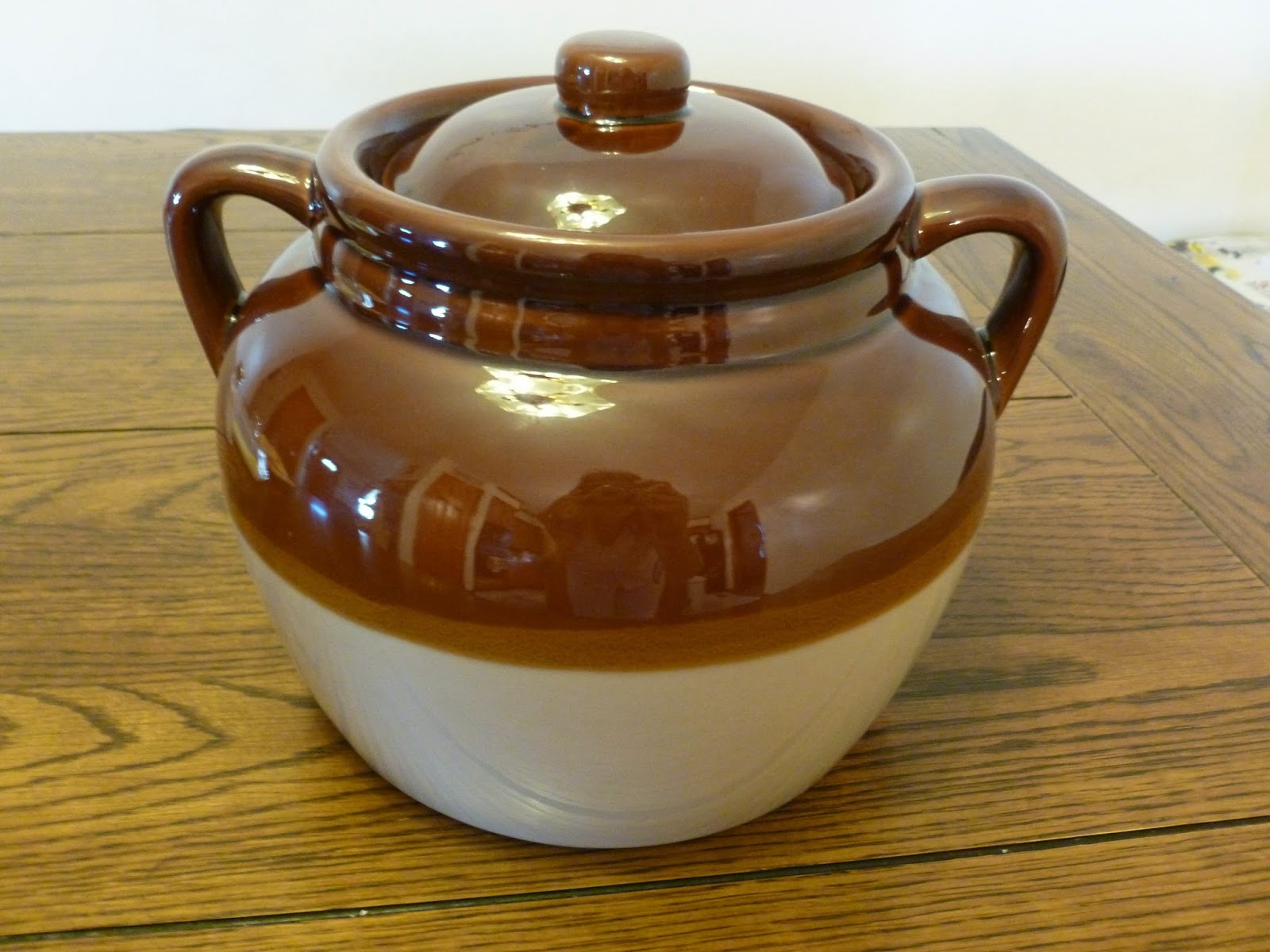
Bean Pot & Supper Review

I recently made some New England Baked Beans and was wishing for an old-fashioned bean pot.  I made do with a cast iron pan, but decided to take the plunge and buy a bean pot.  I did a lot of research and settled on the  R & M International 4.5 Quart Large Ceramic Bean Pot from Amazon.  I wanted a large pot, and this one fit in my budget.  I LOVE my bean pot!  The beans cooked beautifully, and the handles make it easy to get in and out of the oven.  There are some complaints about the lid handle being hard or impossible to use to get the lid off, but I just used a pot holder and was careful and didn’t have any problems.  I highly recommend this pot! Here is the link:  4.5 Qt Bean Pot.

 My first attempt at some classic New England style baked beans were okay, but not overly impressive.  I did a lot of research and found that there are a myriad of variations to the classic recipe, so I ended up creating my own.  

Baked Beans


1 lb dried navy beans

¼ to ½ pound salt pork

1 small onion, sliced

⅓ cup molasses

1 T brown sugar

1 T mustard

Salt and pepper to taste

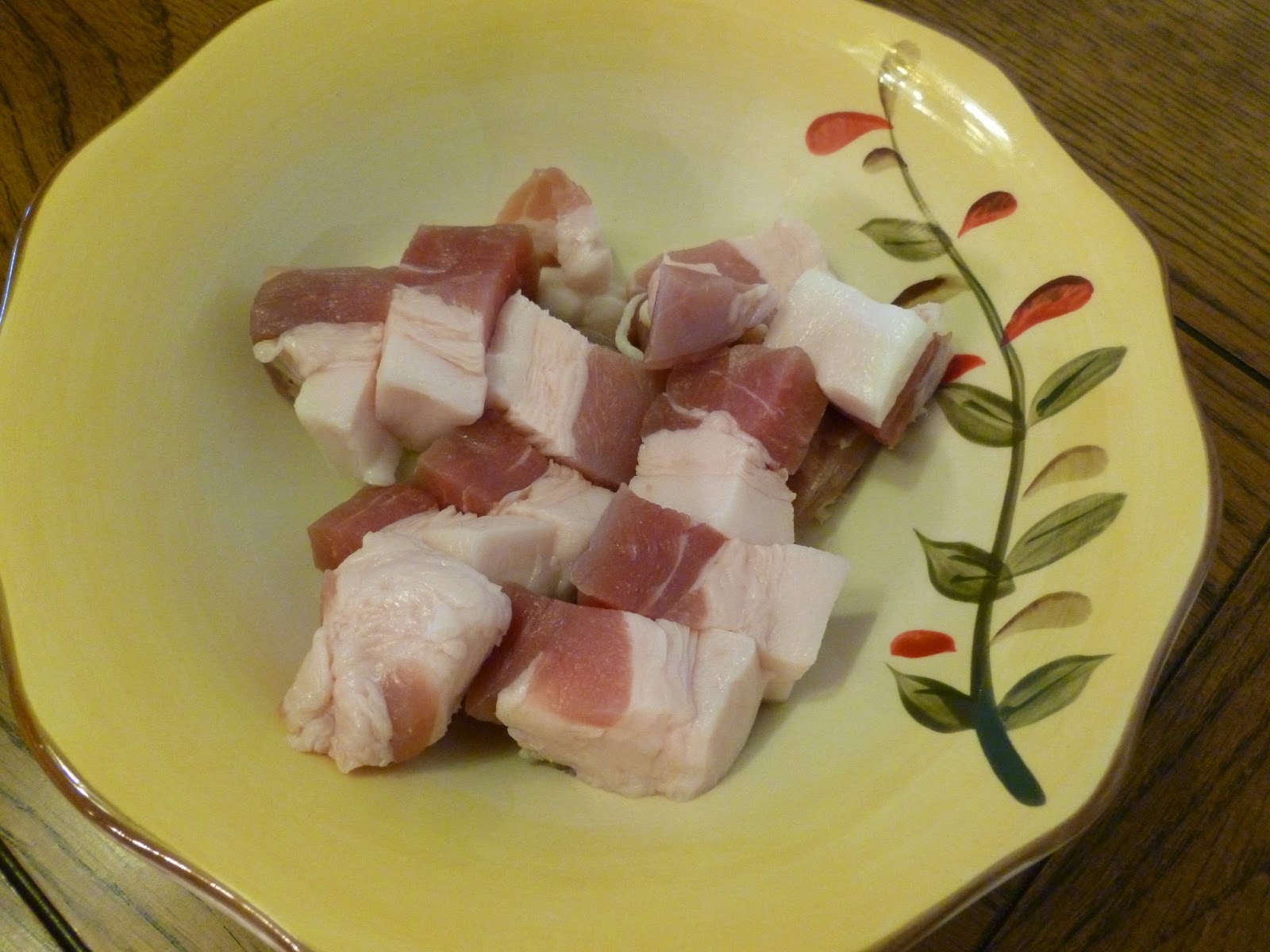
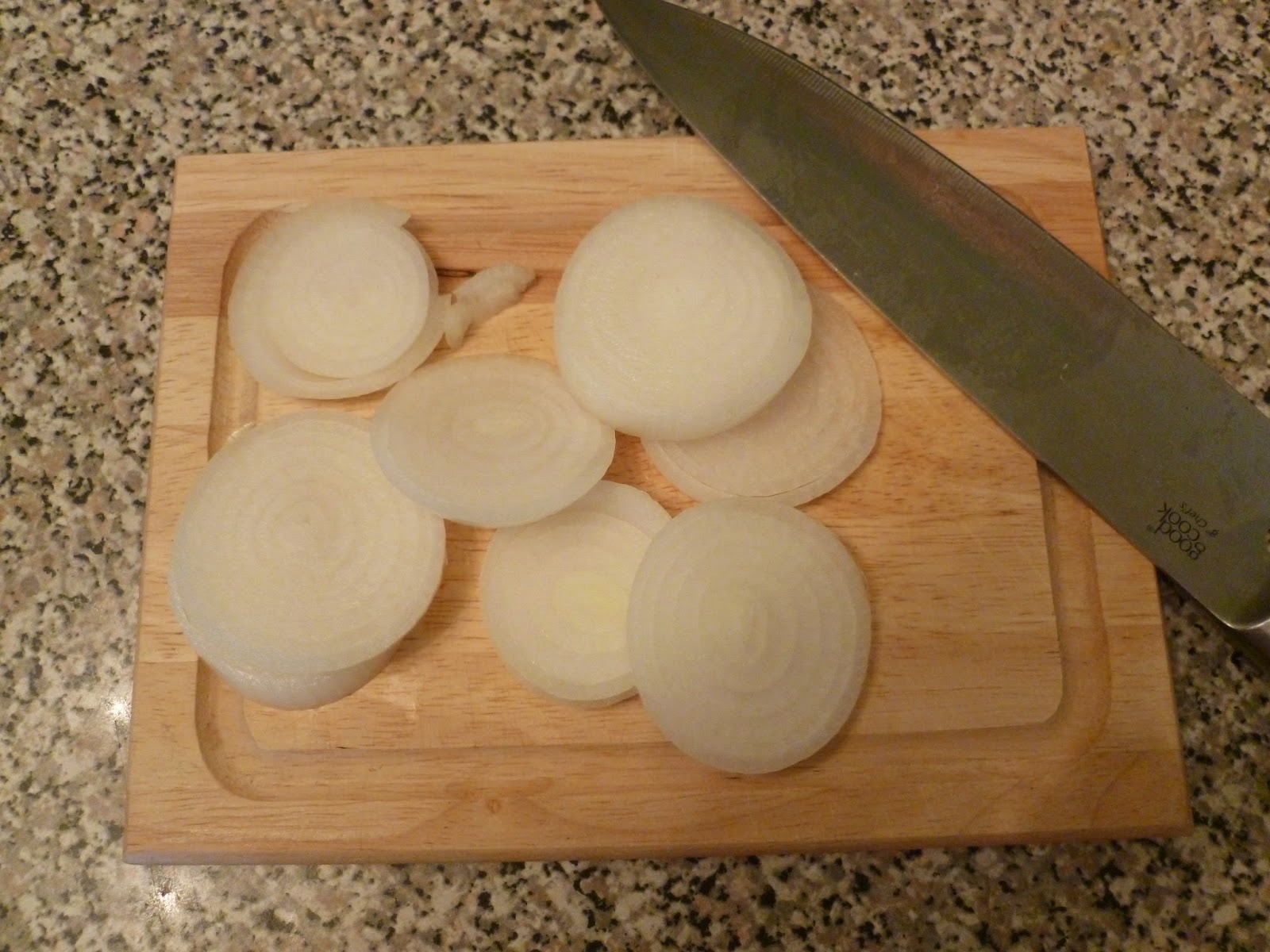
Make sure you get a piece of salt pork with as much meat on it as possible.  Soak beans overnight.  Place in a large pot with plenty of water to cover.  Add the rind of the salt pork and cook until the skins burst.   Slice the onion and roughly chop the salt pork.


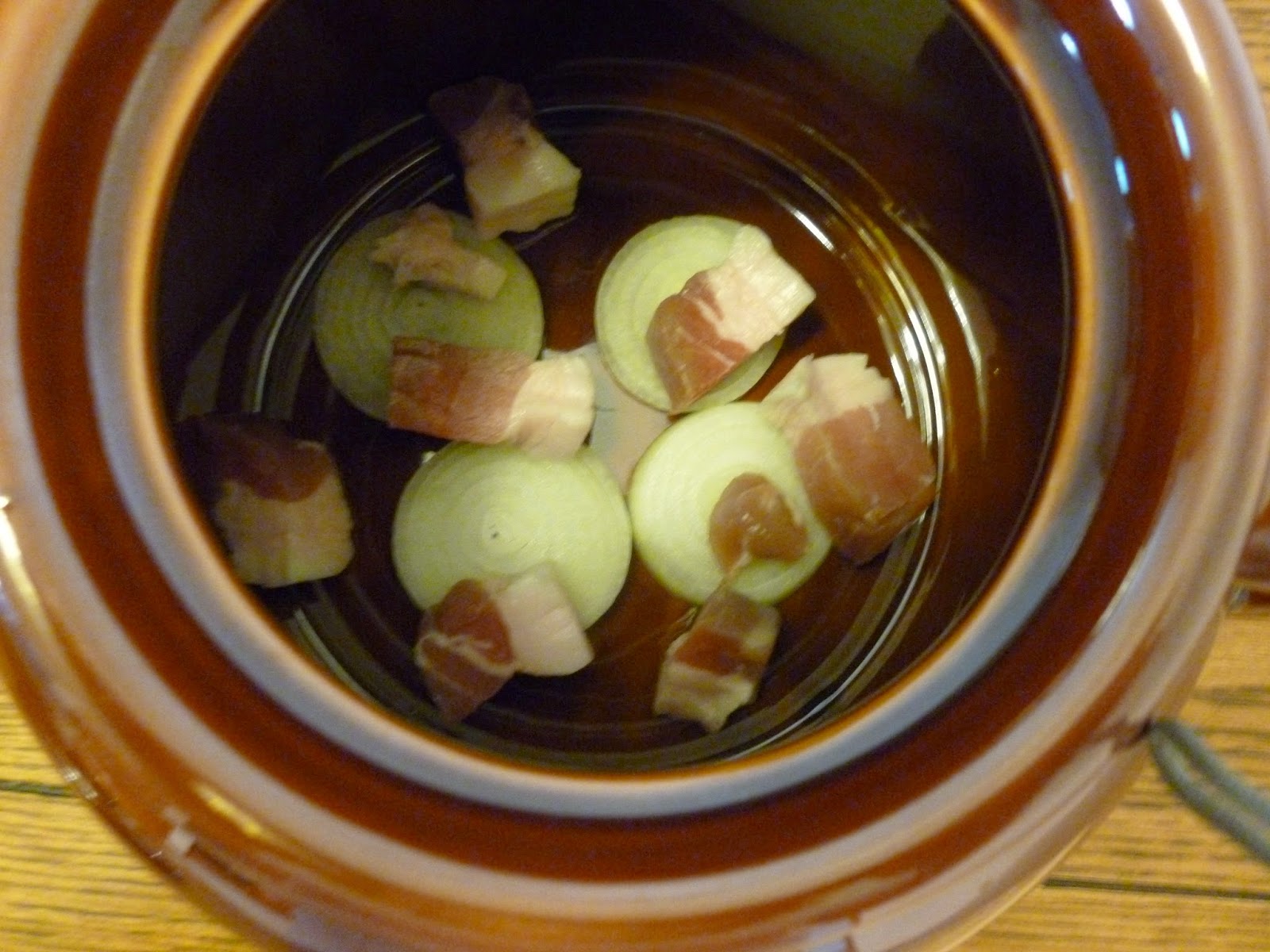
Put a layer of onions on the bottom of the pot, followed by half of the salt pork and then half of the beans.


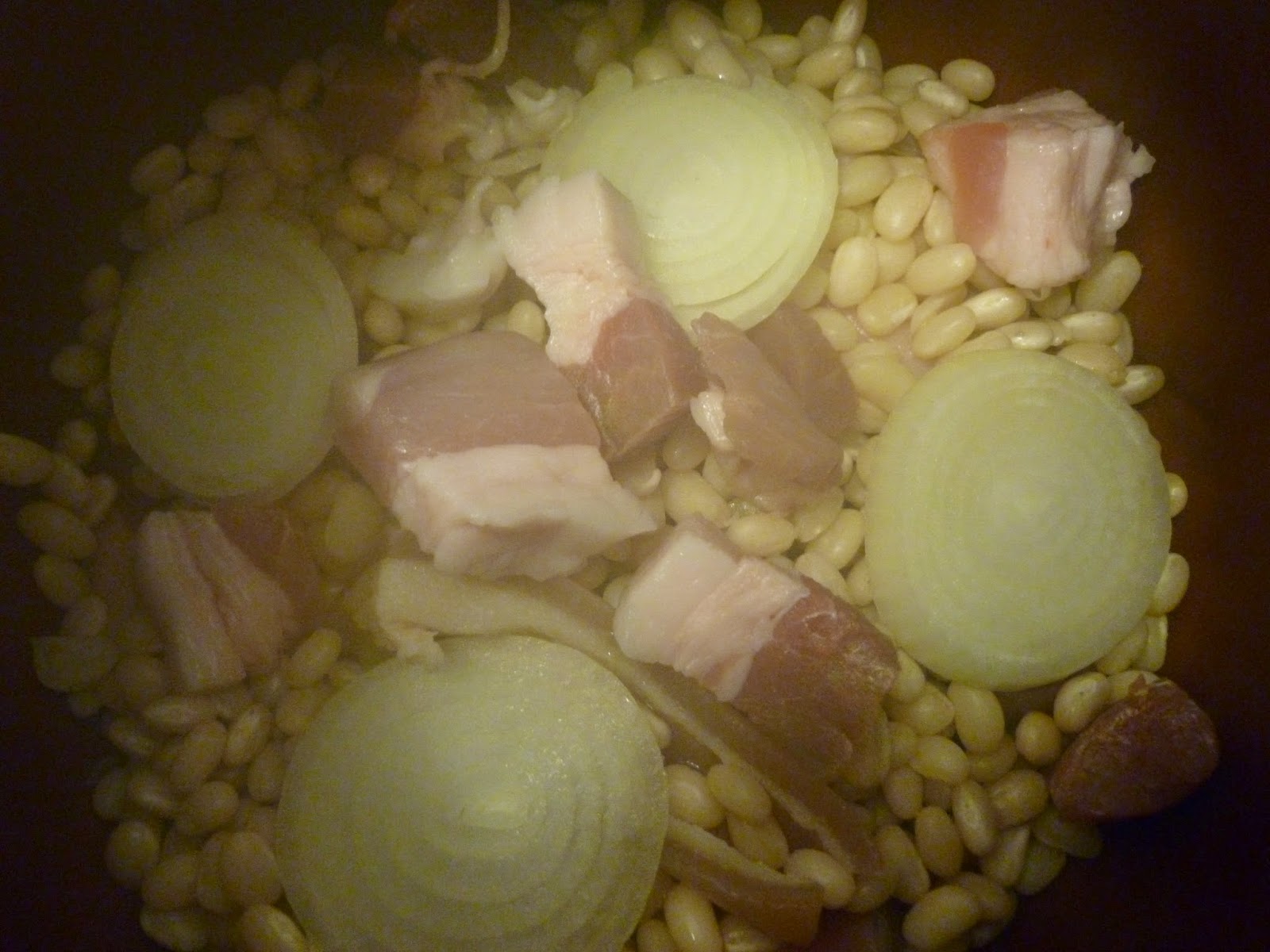
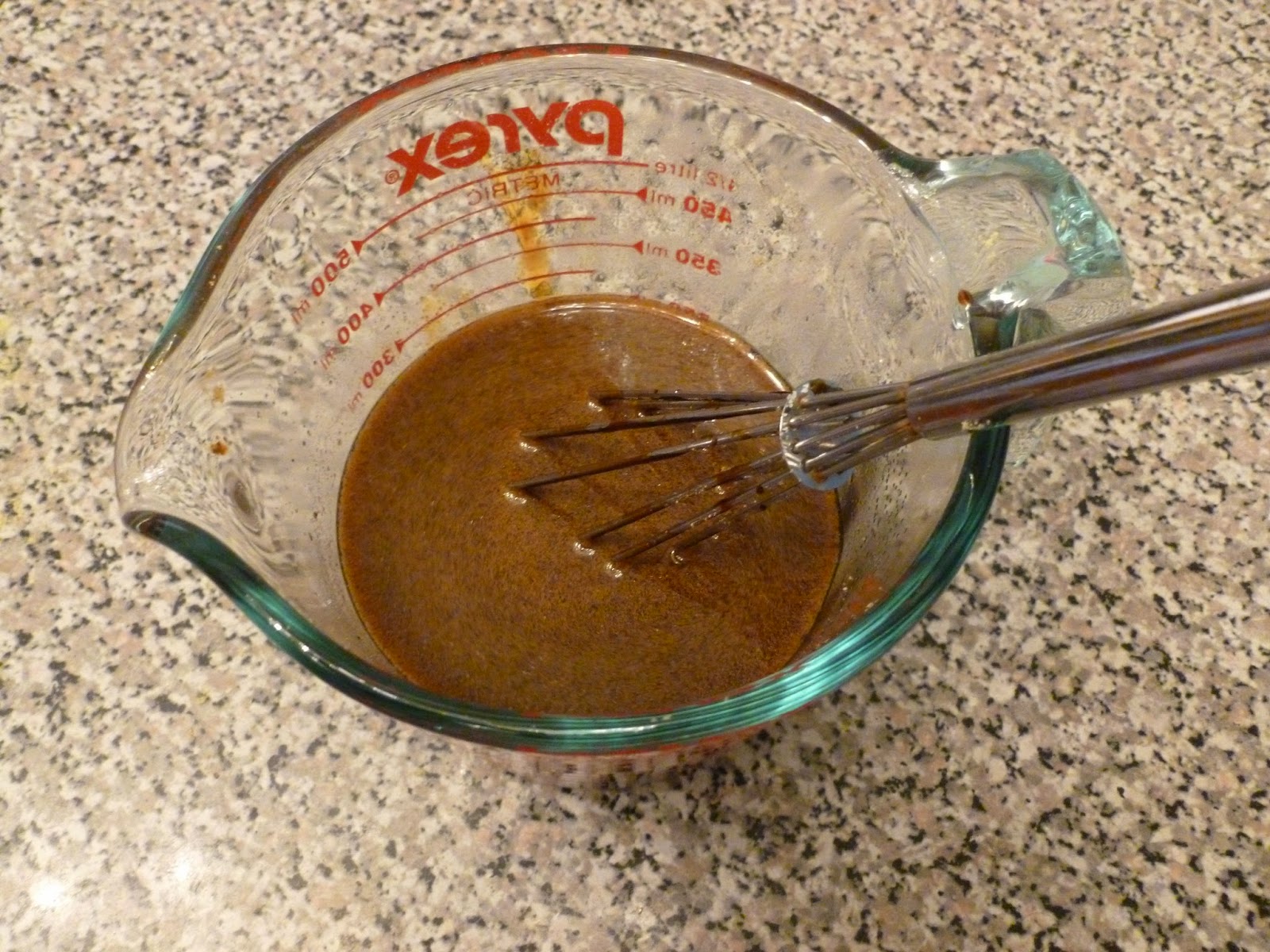
Repeat.  Drain the beans reserving the liquid.  In a cup of the liquid, whisk together the molasses, brown sugar, mustard, salt & pepper.


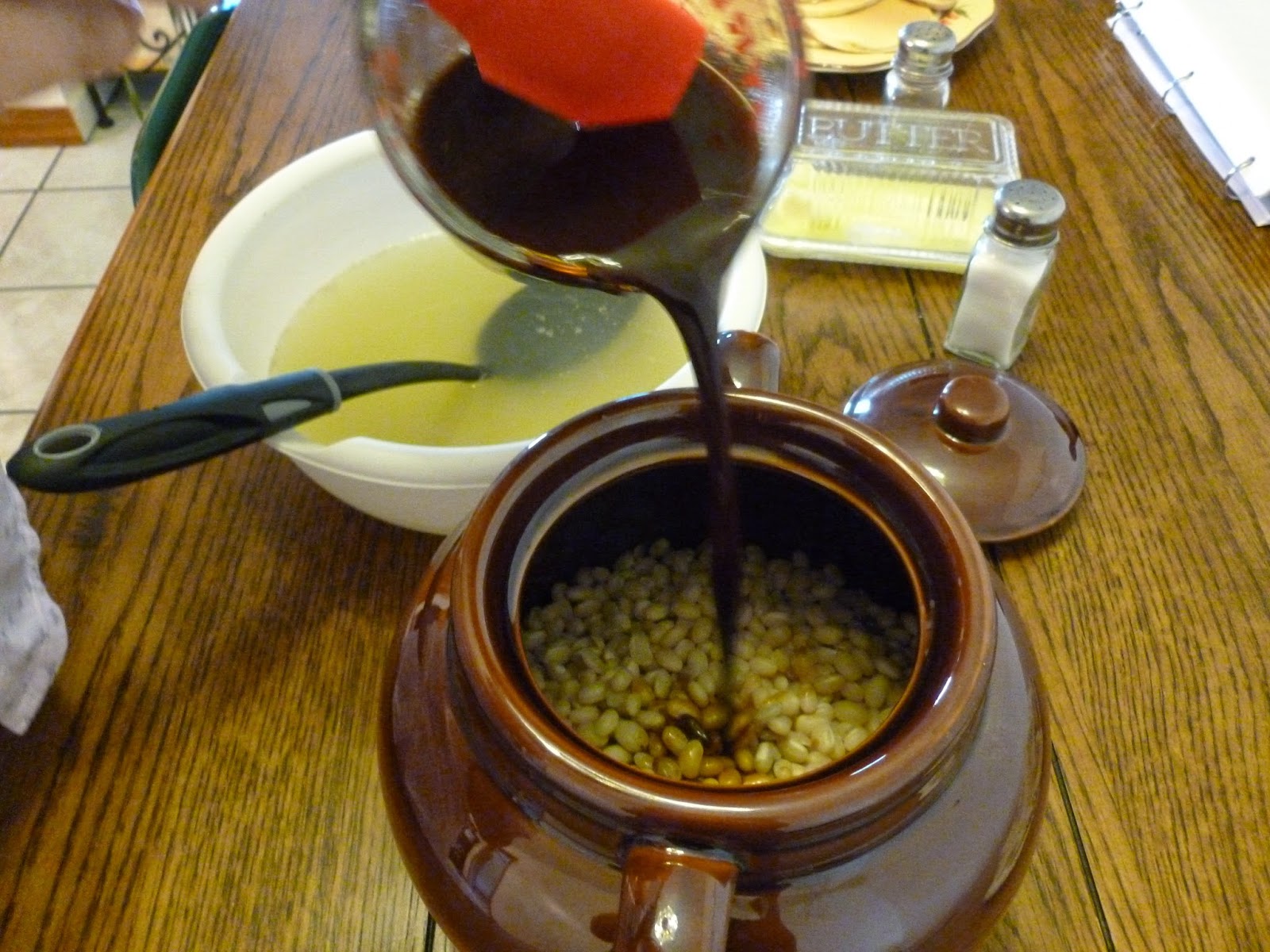
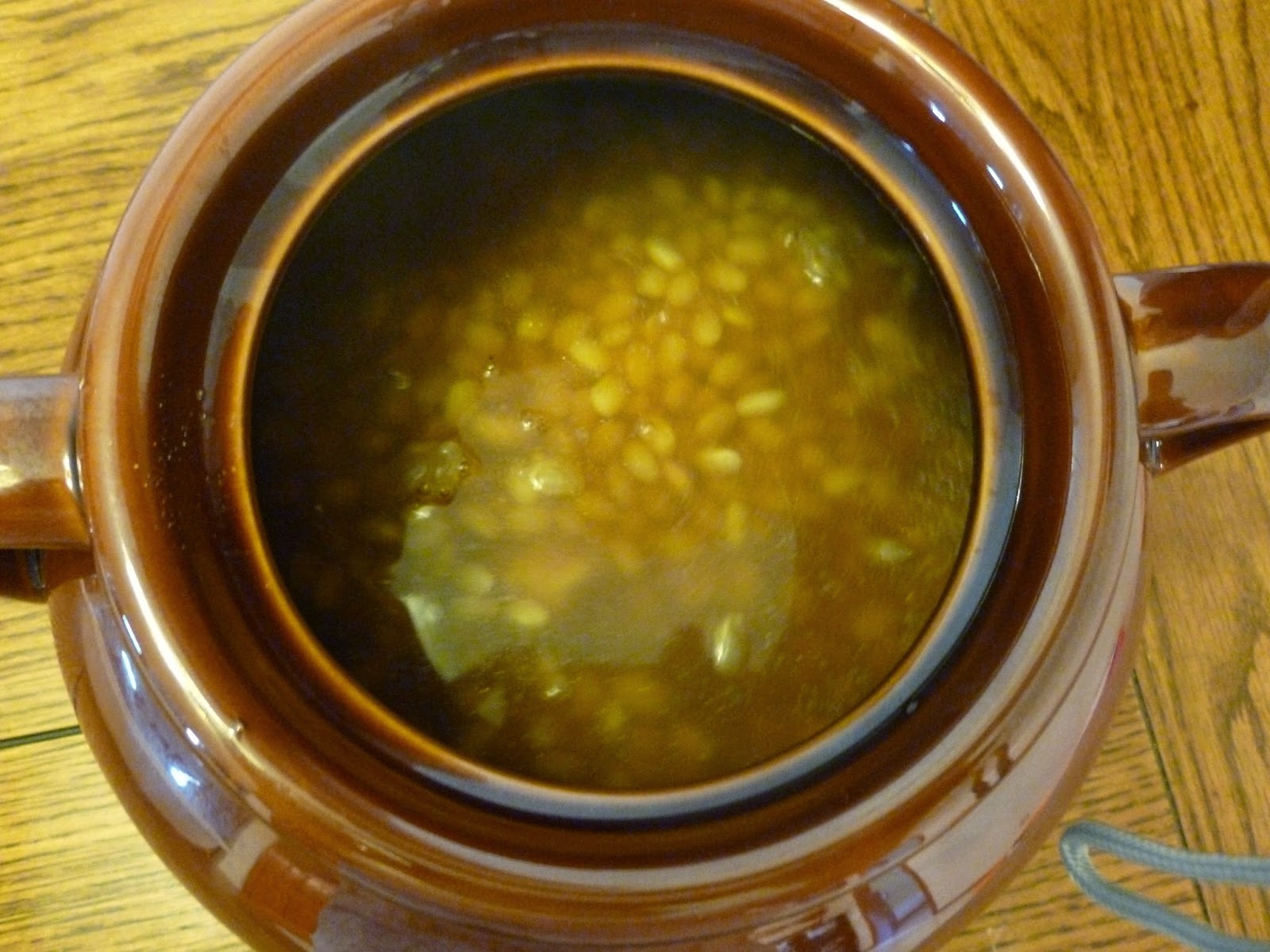
Pour over the beans, then add more cooking liquid until you can see liquid through the beans.

Bake at 250 for four to six hours. Taste after three or four hours and adjust seasonings at that point.

I actually added a little too much water to mine.  If I had cooked them awhile longer, I think they would have gotten thicker like my husband prefers, but they were still wonderful!

 Of course, the traditional accompaniment to baked beans is Boston Brown Bread.  This was my first ever attempt at this steamed bread, but I scoured the internet for a recipe.  Now, personally, I think you should be able to improvise as the need arises.  I was fresh out of straight cornmeal, so I substituted semolina flour.  I also didn’t have a metal coffee can to steam it in, so I used a small metal bowl instead. 

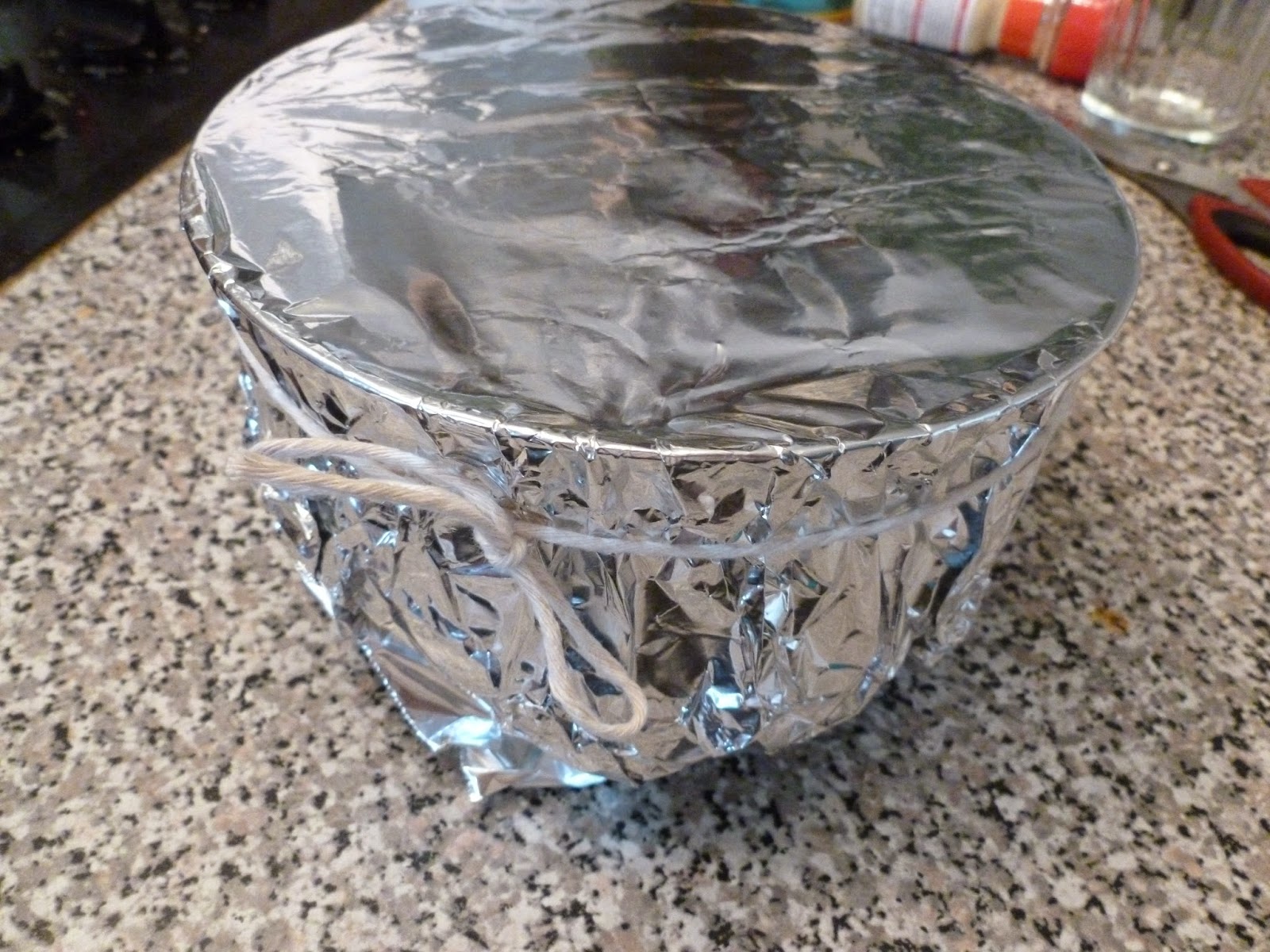
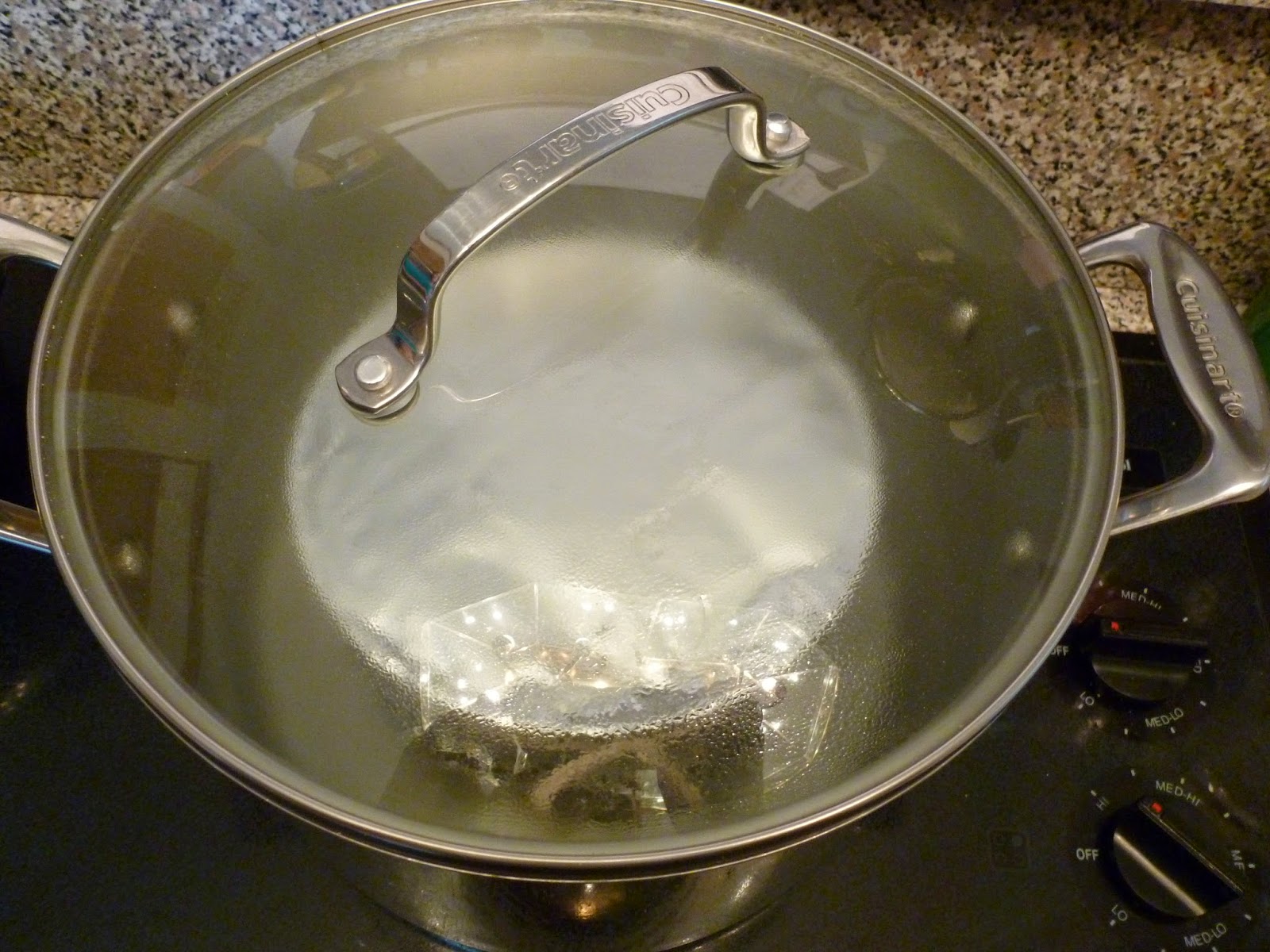
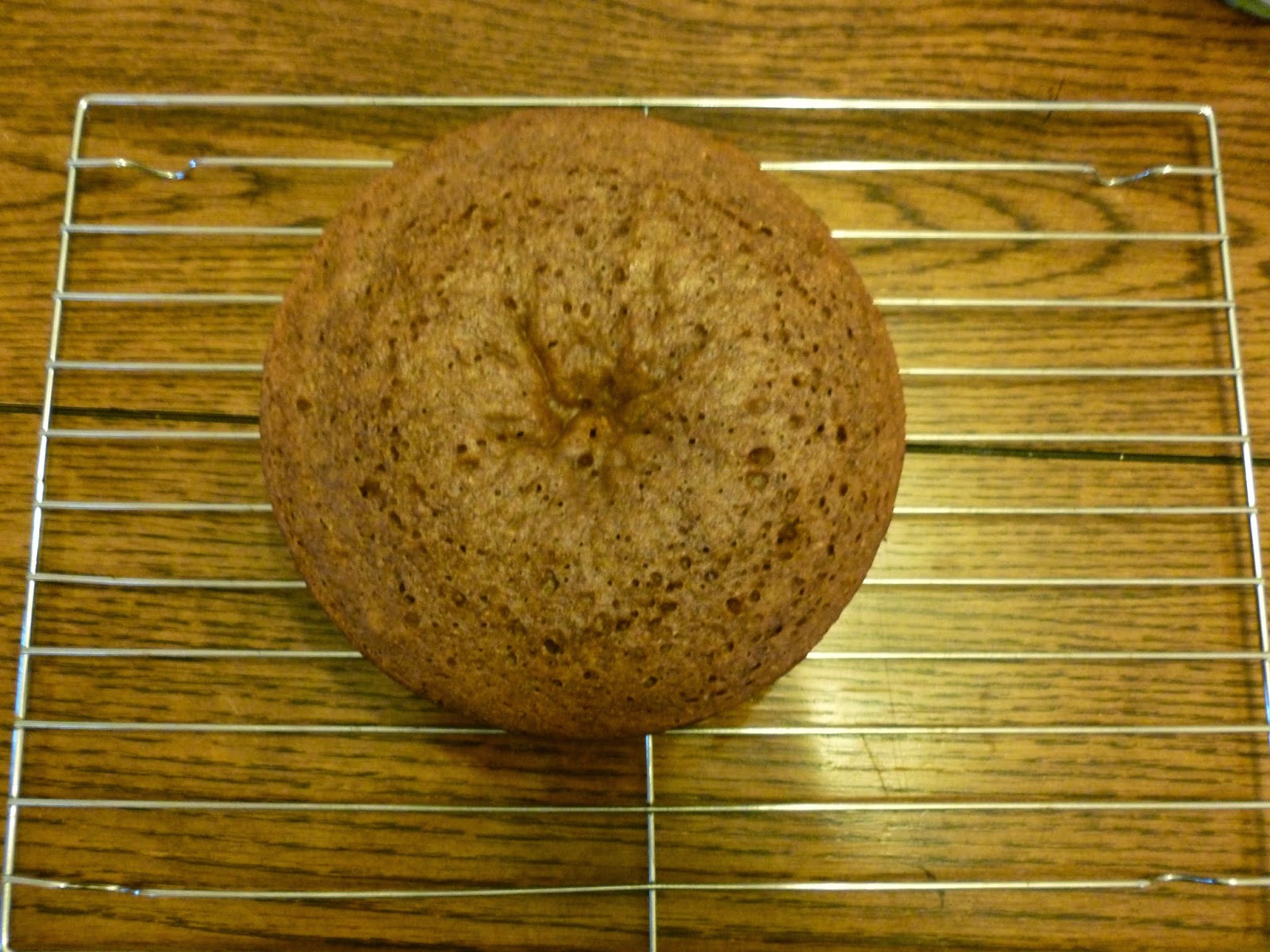
After mixing up the ingredients, I poured them in the metal bowl and tied the foil on tight before starting the steaming process.   I’m very happy how it turned out!  You can find this recipe at http://www.simplyrecipes.com/recipes/boston_brown_bread.

I wasn’t sure what my kids would think of this meal (the first time I made baked beans it was a mixed review, and the Indian Pudding wasn’t a favorite either), but it was unanimously declared a hit.

I love my bean pot and will be using it–and the above recipes–again and again.

I was not paid in any way for this review.  I simply wanted to share my experience with this bean pot and my recipe.  Hope you enjoyed it!

Carina Contini’s Kitchen Garden Cookbook by Carina Contini

Carina Contini's Kitchen Garden Cookbook: A Year of Italian Scots Recipes
My rating: 5 of 5 spoons
ggggg 

I surprised my kids this morning with homemade pancakes using the recipe for ‘Nona Olivia’s Pancakes’, and they were a big hit. My husband even voted the recipe a keeper! The recipe said it served four, and I was serving five, so I doubled it thinking we’d have a few left over. Umm, probably shouldn’t have done that! I had at least twice as many pancakes as I needed, but my kids are happy to have leftover pancakes for breakfast tomorrow!

I’m not a huge fan of books set up by month as what is in season say during July in one area might be in season in June or August somewhere else. However, that is just a personal preference. Also, while it talks about what fruits or vegetables are in season, it also goes by meats as well. For instance, January says “In season we have cabbage, cauliflower, chicory, chard, pheasant, partridge, red deer, haddock, cod, whiting and pears.” There are cook’s notes in the beginning of the book as well as the history of her garden, and growing notes throughout the book. It is also to be noted that the author lives in Scotland, so here in America some things are harder, if not impossible to find such as langoustines.

The author is Scottish, but her father was Italian. This makes for some interesting Scots/Italian recipes such as ‘Broad Bean, Pea & Ham Pasta’ and ‘Cooked Cream with Rhubarb Compote & Toffee Brittle’ which is actually an indulgent ‘Panna Cotta’. I love how she integrated both heritages into her food.

I really like this cookbook. It’s beautiful, well made with an abundance of delightful recipes. While there are some that either don’t appeal to me or I don’t have access to the ingredients, there are many, many more that have my taste buds salivating! I highly recommend this cookbook to all.

I received a copy of this cookbook from Quartos Books for my honest review. All thoughts and opinions are my own.